Unbound Commerce: How retail innovation is breaking down walls and meeting customers everywhere
Retail is no longer confined to four walls. As consumer expectations evolve at lightning speed, brands must adapt to a world where commerce happens anywhere — at marathons and music festivals, in parking lots, and even inside a camper van. In a recent Future Commerce podcast, Aptos VP of Strategy & Product Nikki Baird and Aptos CIO Jason “JJ” James shared powerful insights on how retailers can thrive in this new era of “unbound commerce.” From enabling frictionless pop-up experiences to building resilient tech stacks that withstand network fragility, their discussion revealed what’s next for retail innovation.
Here’s a deep dive into four key takeaways that every retailer should know as we head into 2026:
1. The rise of ephemeral retail experiences
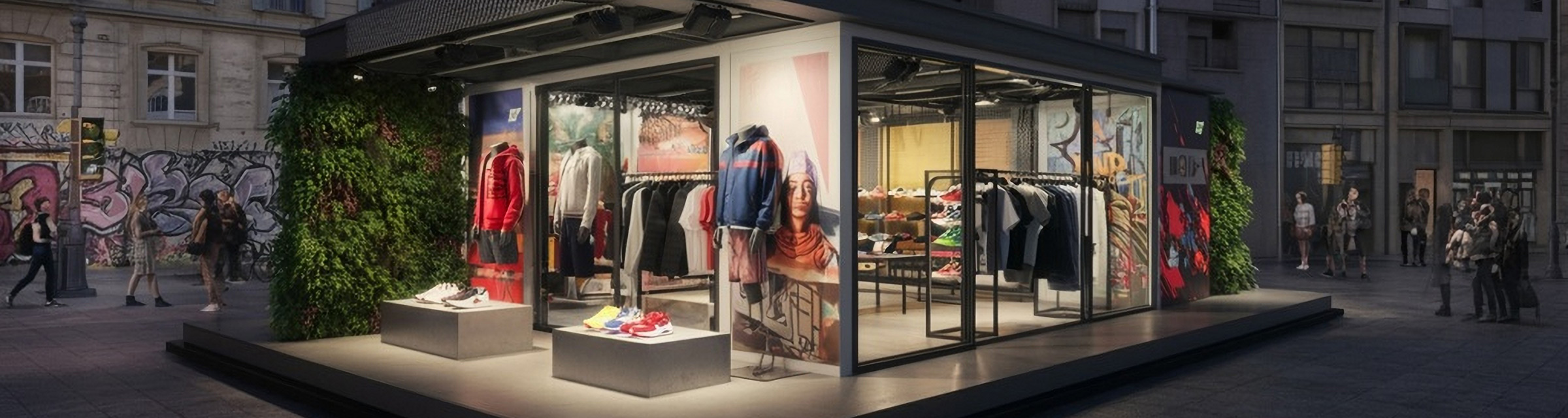
Pop-ups and event-based retail are no longer niche. They’re strategic. Nikki highlighted how brands like New Balance transform cultural moments into commerce opportunities, such as setting up a 100-register “store” at the New York City Marathon. These activations aren’t just about selling products; they’re about embedding the brand into lifestyle touchpoints where authenticity matters most.
Why does this work? Because discovery now happens outside traditional stores. Consumers want brands to meet them where they live, play, and work. Whether it’s a marathon expo or a college move-in week, these experiences create emotional connections that drive loyalty.
JJ added that these setups require immense flexibility. Retailers must plan for unpredictable environments — think parking lots with shaky Wi-Fi — and still deliver seamless transactions. This means building technology infrastructure that’s portable, secure, and resilient. The ability to provision devices in minutes and operate offline is no longer optional; it’s a competitive advantage.
Learn more about pop-up retail strategies and how they drive engagement — and comp sales.
2. Technology as the enabler of agility
Behind every successful pop-up is a robust tech backbone. JJ explained how Aptos rebuilt modern POS infrastructure from the ground up to handle fragility. Traditional POS systems crumble when connectivity fails, but modern solutions cache data locally, enabling transactions even during outages.
This offline capability isn’t just a convenience; it’s a safeguard against lost sales and damaged brand reputation. As JJ noted, consumers have zero patience for downtime. A five-minute delay can cost a retailer not just a sale but long-term loyalty.
Nikki emphasized that flexibility extends beyond hardware. Retailers need systems that can scale up or down, adapt to different contexts, and deliver the right experience for the moment, whether that’s speed at a marathon or full brand immersion at a wellness event.
The ability to integrate loyalty programs, handle mixed carts, and manage event-specific inventory seamlessly is what turns a pop-up into a brand-building powerhouse.
3. Security and trust in a borderless retail world
As retail moves beyond stores, security risks multiply. JJ warned that retail is now the third most attacked sector in the U.S. Ephemeral retail environments, where transactions happen in nontraditional spaces, are prime targets for cybercriminals.
Retailers must rethink security holistically. It’s not enough to protect in-store systems; brands need to secure every touchpoint, from mobile POS devices to partner integrations. JJ stressed the importance of vetting vendors and ensuring data protection across the entire ecosystem. Annual training isn’t sufficient; continuous education and proactive threat monitoring are essential.
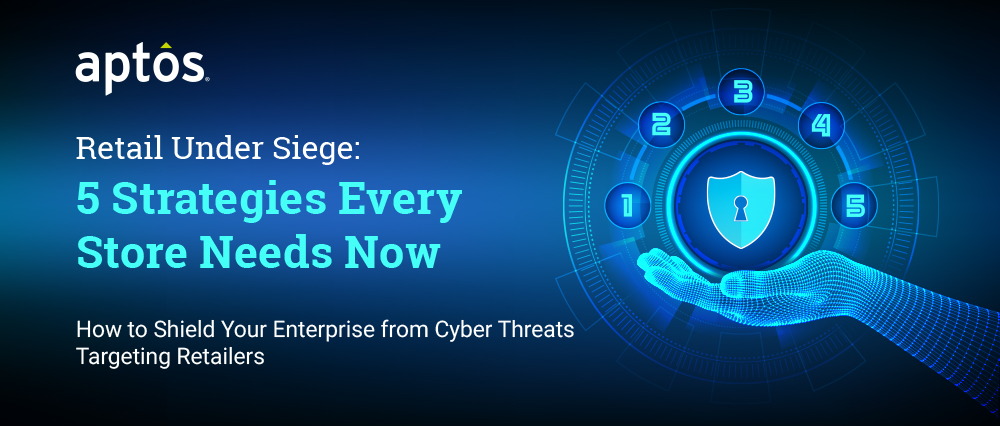
View our infographic to learn more about how retailers can create more secure enterprises.
4. The future: Agentic AI and beyond
Looking ahead, both Nikki and JJ see AI as a transformative force. JJ predicts that intelligent AI agents acting on behalf of consumers will soon shop for us while we sleep. Imagine a system that knows your travel plans, checks the weather, and suggests new shoes before you even think about it.
Robotics may also enter the retail stage, with humanoid assistants appearing in stores as early experiments. While these may start as novelty attractions, they signal a future where automation and personalization converge.
Nikki added that AI’s role isn’t limited to consumers; it will empower store associates too. The challenge is delivering AI-driven insights in ways that feel supportive, not invasive. By enabling associates with real-time recommendations and intuitive tools, retailers can elevate human interaction rather than replace it.
Conclusion
Retail’s next chapter is unbound: free from the constraints of physical stores and legacy systems. As Nikki and JJ underscored, success hinges on agility, security, and the ability to deliver authentic experiences wherever customers gather. From marathons to mobile vans, commerce is becoming a cultural moment, and technology is the enabler. For retailers, the mandate is clear: innovate boldly, plan for unpredictability, and embrace the future of agentic AI. Because in a world where expectations never stop rising, standing still is not an option.
For many more insights and takeaways, listen to the full podcast.